What this hexagram is about
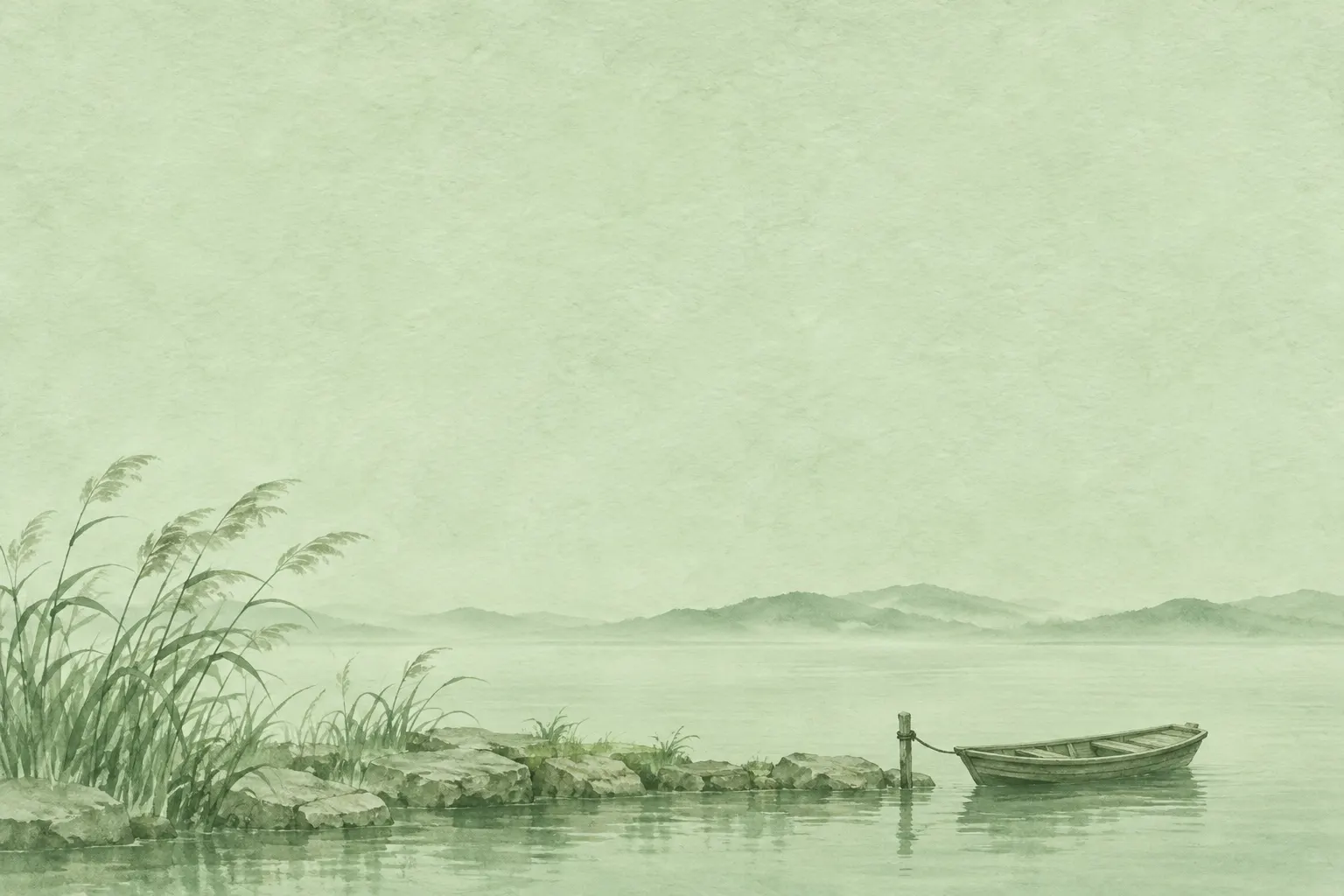
I Ching hexagram 19, Drawing Near (臨), is about moving closer to someone or something with care, and the responsibility that comes with it. It is about moving closer to someone or something with care and attention. The upper trigram is Earth, which is steady and receptive. The lower trigram is Lake, which is joyful and open. Together they make a picture of standing on the shore of a lake, looking down into clear water. You are close enough to see what is there, to reach out and touch it. That is the heart of this hexagram: being present, being near, and taking on the responsibility that comes with closeness.
Drawing Near is not about rushing in or grabbing hold. It is about approaching with steadiness, like a person who walks slowly down to the water's edge rather than running and splashing. The earth above the lake suggests a solid ground from which you can oversee and care for what is below. This hexagram often comes up when you are stepping into a role that involves guiding others, making a commitment, or getting involved in something that matters. It asks you to draw near with your eyes open and your feet planted.
The Judgment in plain words
The Judgment says: "Great success. It is favourable to hold steady. When the eighth month comes, there is misfortune." That first part is encouraging. Drawing near in the right way, with patience and sincerity, leads to something that works well. But the second part is a warning. The eighth month is a point in the cycle when things begin to turn. In the Chinese calendar, the eighth month falls in autumn, when growth fades. The hexagram is telling you that this closeness, this involvement, will not last forever. There is a natural limit to how long you can stay in this position.
What the Judgment asks of you is simple: hold steady while you can. Do not try to force the situation to last longer than it is meant to. If you are in a role where you care for others, or you are drawing near to a person or a project, do it fully now. But know that the eighth month comes. That is not a prediction of failure. It is a reminder that all situations change, and the wise person accepts that change without clinging. The misfortune comes only if you pretend the eighth month will never arrive.
The Image
The Image says: "Above the lake there is earth: Drawing Near. In the same way, the noble person teaches without end and holds and protects the people without limit." Picture a lake with a bank of earth rising above it. The earth does not push into the water. It simply stays close, holding the lake in place. The water can move and change, but the earth is there, steady and present. That is the scene. It is not dramatic. It is quiet and solid.
For you today, this might look like teaching a child, mentoring a colleague, or caring for a friend. You do not need grand gestures. You just need to be there, consistently, without running out of patience. The noble person in this Image does not set a time limit on their care. They teach and protect without counting the cost. That does not mean you give everything until you are empty. It means you approach your role with a steady heart, not a grudging one. You draw near and stay near for as long as it matters.
The six lines
Line 1, the bottom line, says: "Drawing near together. Holding steady brings good fortune." You and someone else are moving toward each other. That is a good sign. But the key is steadiness. Do not rush the closeness. Let it build naturally, and it holds.
Line 2 says: "Drawing near together. Good fortune; nothing is unfavourable." This is the same image but stronger. The pairing works. Both sides are willing. There is no force, no resistance. This line suggests a relationship or collaboration that flows easily.
Line 3 says: "Drawing near with sweet words. Nothing is favourable. Once one is worried about it, there is no blame." Here the sweetness is flattery, not genuine warmth. You are using charm to get close, and that does not work. But if you recognise it, if you feel that worry in your gut, you can stop. The worry itself saves you from blame.
Line 4 says: "Arriving to oversee. No blame." This is a straightforward line. You come to a situation to take responsibility. There is no trick, no sugar. You simply show up and do what needs doing. That is enough.
Line 5 says: "Drawing near with wisdom. This suits a great lord. Good fortune." Wisdom here means seeing clearly. You are not fooled by appearances. You know what the situation needs, and you act on that knowledge. This is the best way to lead or to help.
Line 6 says: "Drawing near with earnestness. Good fortune, no blame." At the top of the hexagram, closeness is offered with genuine feeling. There is no strategy, no cleverness. Just honesty. That brings good fortune and leaves no fault behind.
All six lines together describe a movement from simple togetherness, through the risk of flattery, to arriving, to wisdom, and finally to earnestness. Each line is a different way of drawing near.
When it comes up in your cast
When you cast this hexagram, it suggests that your question is about closeness. It could be about love, where you are drawing near to someone or they to you. It could be about work, where you are stepping into a role that involves guiding or caring for others. It could be about a decision that asks you to get involved rather than staying at a distance. The hexagram does not tell you what will happen. It describes what the moment asks of you: to draw near with steadiness, wisdom, and honesty.
The moving lines in your cast point you to their own texts. If a line moves, read that line closely. It tells you which aspect of Drawing Near matters most for your situation. And when a line moves, the hexagram turns into a second hexagram, which shows the direction the situation is moving. The inner hexagram of Drawing Near is always Return, hexagram 24, which is about coming back to a starting point after a cycle. That inner pattern suggests that even as you draw near, there is a turning underneath, a natural rhythm of coming and going.
Remember, the I Ching is for reflection and entertainment. It helps you look at your question from a new angle but does not decide for you. Use it to think more clearly about how you are drawing near, and whether you are doing it in a way that fits the moment. The rest is up to you.
The Judgment
元亨。利貞。至于八月有凶。
Great success. It is favourable to hold steady. When the eighth month comes, there is misfortune.
The Image
澤上有地,臨;君子以教思无窮,容保民无疆。
Above the lake there is earth: Drawing Near. In the same way, the noble person teaches without end and holds and protects the people without limit.
The lines
Line 1 初九
咸臨,貞吉。
Drawing near together. Holding steady brings good fortune.
Line 2 九二
咸臨,吉无不利。
Drawing near together. Good fortune; nothing is unfavourable.
Line 3 六三
甘臨,无攸利。既憂之,无咎。
Drawing near with sweet words. Nothing is favourable. Once one is worried about it, there is no blame.
Line 4 六四
至臨,无咎。
Arriving to oversee. No blame.
Line 5 六五
知臨,大君之宜,吉。
Drawing near with wisdom. This suits a great lord. Good fortune.
Line 6 上六
敦臨,吉无咎。
Drawing near with earnestness. Good fortune, no blame.