
What this hexagram is about
I Ching hexagram 61, Central Sincerity, is about the quiet power of being true from the inside out. It is not about grand gestures or loud promises. It is about the steady, honest core that other people and even animals can sense. The Chinese name 中孚 means inner trust or sincerity at the center.
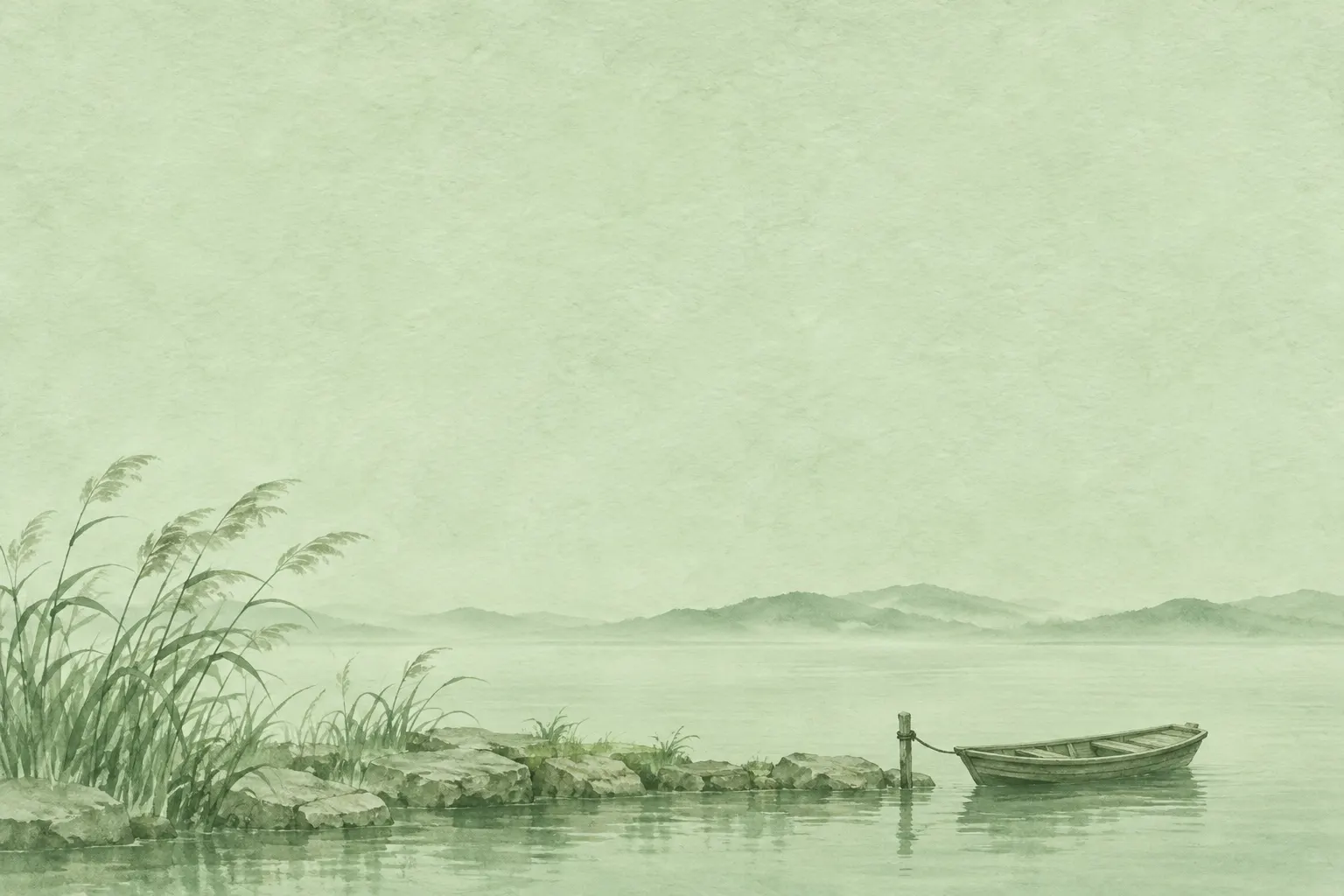
The upper trigram is Wind, 巽, which is gentle and penetrating. The lower trigram is Lake, 兌, which is open and joyful. Together they make a picture of wind moving across a lake. The wind stirs the water without forcing it, and the lake reflects the wind without resistance. This is how sincerity works: it moves through you and between you and others, not by pushing but by being real.
When you are in a situation that calls for Central Sincerity, the question is not what you say but what you truly hold inside. People, like water, respond to what is genuine. The hexagram asks you to check your own heart and act from what you find there, without pretense.
The Judgment in plain words
The Judgment says: "Pigs and fish: good fortune. It is favourable to cross the great river. It is favourable to hold steady." Pigs and fish are the humblest offerings, the simplest things. If your sincerity reaches even them, it is real. That kind of truth brings good fortune.
Crossing the great river is a picture of taking on a big risk or a major change. The hexagram says this is favourable, but only because your sincerity carries you. You do not cross by force or cleverness. You cross because you are trusted and because you trust yourself. The river does not part for you; you move through it with steady purpose.
Holding steady is also favourable. That means staying true to what you know is right, not being swayed by fear or excitement. The Judgment does not promise success. It says that when you act from a sincere center, the situation tends to move well. You can take the step or stay the course, and both are right if your heart is clear.
The Image
The Image says: "Wind above the lake: the image of inner sincerity. The noble person uses this to discuss legal cases and to slow down executions." Wind over a lake stirs the surface but does not muddy the depths. It is a picture of influence that comes from gentleness, not force. The lake is still and clear, and the wind moves across it without breaking its calm.
For the noble person, this becomes a guide for how to handle judgment. When someone is accused, you do not rush. You slow down, you listen, you discuss. Sincerity means caring about the truth more than about being quick or decisive. In your own life, this might look like pausing before you make a hard call, or giving someone a chance to explain before you decide. The image asks you to let sincerity shape your actions, even when you hold power.
The six lines
Line 1, 初九, says being prepared brings good fortune. If you turn toward other things, you do not find rest. This is the bottom line, the start. You are ready, but the moment asks you to stay focused. If you let your attention scatter, you lose the quiet center that makes sincerity work. Rest comes from staying with what you have prepared.
Line 2, 九二, gives a beautiful picture: a crane calls from the shade, and its young answer. I have a fine goblet, and I will share it with you. This is sincerity in relationship. You do not have to shout. When you are true, the right people respond naturally. The goblet is a gift you offer freely, and sharing it deepens the bond.
Line 3, 六三, shows a person who gets a rival. Sometimes he beats the drum, sometimes he stops. Sometimes he weeps, sometimes he sings. This line warns against being tossed around by your feelings. Rivalry stirs up excitement and despair in turn. Sincerity is lost when you react instead of staying steady. The line does not say this is wrong, only that it is unstable.
Line 4, 六四, says the moon is nearly full. The partner horse is lost. No blame. You are close to completion, but something you relied on is gone. A horse that was part of your team has wandered off. Yet there is no blame. Sincerity means you can let go of what you thought you needed and still move forward.
Line 5, 九五, says he has trust and is bound closely to others. No blame. This is the ruler line, the center of the hexagram. Here sincerity has become a bond. You are tied to others not by obligation but by genuine trust. There is nothing to regret.
Line 6, 上九, says a rooster's call rises into the sky. Holding steady brings misfortune. The rooster crows loudly, but its sound is empty, just noise that fades. If you try to hold on to that kind of display, it turns against you. Sincerity cannot be performed. When you push your voice too high, you lose the truth of it.
When it comes up in your cast
When Central Sincerity appears in your cast, it is a sign that the heart of the matter is honesty. Whether you asked about love, work, or a decision, the hexagram points you back to what is real in you. In love, it asks if you are being open without games. In work, it asks if you are trusted and if you trust others. In a decision, it asks what your true intention is, not what looks good.
The I Ching is for reflection and entertainment. It helps you look at a question from a new angle and does not decide for you. If any lines moved when you cast, those lines carry extra weight. Read their texts closely, and the moving lines also create a second hexagram that shows where the situation is heading. The inner hexagram of Central Sincerity is hexagram 27, Nourishment, which suggests that sincerity feeds something deeper in you.
Take this hexagram as an invitation to slow down and check your own center. The answer is not out there. It is already in you, quiet and steady, like the lake under the wind.
The Judgment
豚魚吉,利涉大川,利貞。
Pigs and fish: good fortune. It is favourable to cross the great river. It is favourable to hold steady.
The Image
澤上有風,中孚;君子以議獄緩死。
Wind above the lake: the image of inner sincerity. The noble person uses this to discuss legal cases and to slow down executions.
The lines
Line 1 初九
虞吉,有它不燕。
Being prepared brings good fortune. If you turn toward other things, you will not find rest.
Line 2 九二
鳴鶴在陰,其子和之,我有好爵,吾與爾靡之。
A crane calls from the shade, and its young answer it. I have a fine goblet, and I will share it with you.
Line 3 六三
得敵,或鼓或罷,或泣或歌。
He gets a rival. Sometimes he beats the drum, sometimes he stops. Sometimes he weeps, sometimes he sings.
Line 4 六四
月幾望,馬匹亡,无咎。
The moon is nearly full. The partner horse is lost. No blame.
Line 5 九五
有孚攣如,无咎。
He has trust and is bound closely to others. No blame.
Line 6 上九
翰音登于天,貞凶。
A rooster's call rises into the sky. Holding steady brings misfortune.